Economy
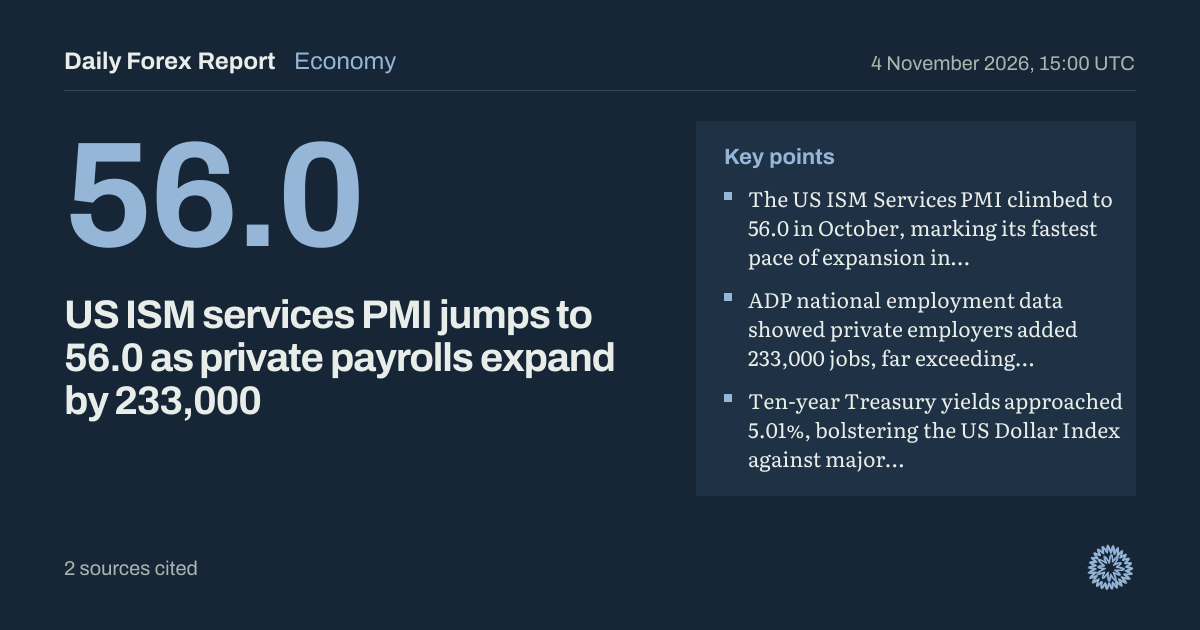
US ISM services PMI jumps to 56.0 as private payrolls expand by 233,000
US services growth surged to 56.0 in October while private employers added 233,000 jobs, highlighting relentless domestic momentum ahead of the Bank of England rate decision.
Key points
- The US ISM Services PMI climbed to 56.0 in October, marking its fastest pace of expansion in over two years.
- ADP national employment data showed private employers added 233,000 jobs, far exceeding consensus estimates.
- Ten-year Treasury yields approached 5.01%, bolstering the US Dollar Index against major international currencies.
The United States service sector exhibited robust economic expansion in October, according to survey results published by the Institute for Supply Management on Wednesday, November 4, providing fresh evidence of resilient consumer demand across the broader economy.
The ISM Services PMI accelerated to 56.0 percent from 54.9 percent in September, comfortably surpassing Wall Street expectations and registering its highest reading since early 2024. The business activity gauge jumped to 59.9, while the new orders sub-index held firmly at 57.4, confirming broad-based order strength across healthcare, finance, and software technology services.
The services data coincided with a stellar private employment release from the ADP Research Institute, which reported that US private sector payrolls expanded by 233,000 positions in October, smashing economist consensus forecasts of 115,000. Manufacturing and service employers maintained solid hiring momentum, indicating that corporate balance sheets remain well insulated against high borrowing costs.
The robust economic data package triggered another upward repricing in benchmark bond yields. The 10-year US Treasury yield briefly crossed the psychological 5.00 percent threshold to trade at 5.01 percent, driving broad-based dollar gains. Currency desks turned their focus to London, where the Bank of England convenes on Thursday to deliver its quarterly Monetary Policy Report amid widening growth differentials between Britain and the United States.