Economy
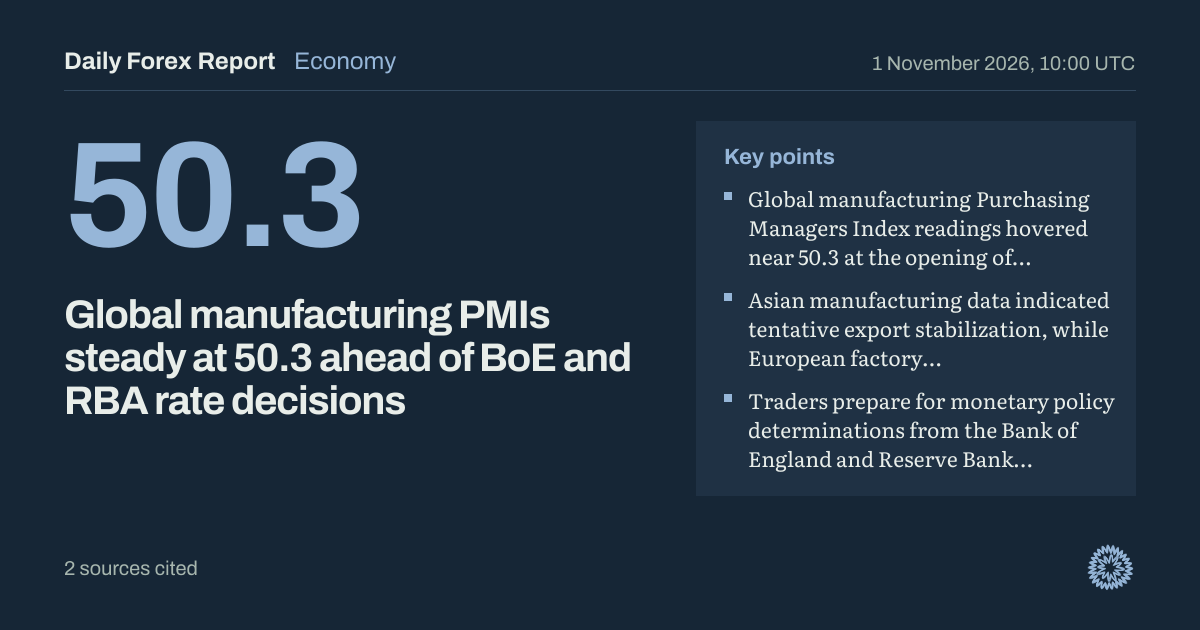
Global manufacturing PMIs steady at 50.3 ahead of BoE and RBA rate decisions
Manufacturing survey indicators stabilized at 50.3 heading into November, as currency markets prepared for central bank decisions from the Bank of England and Reserve Bank of Australia.
Key points
- Global manufacturing Purchasing Managers Index readings hovered near 50.3 at the opening of November trade.
- Asian manufacturing data indicated tentative export stabilization, while European factory sectors remained subdued.
- Traders prepare for monetary policy determinations from the Bank of England and Reserve Bank of Australia this week.
Global manufacturing activity exhibited tentative stabilization as November began, according to early survey data and purchasing managers indices released on Sunday, November 1, providing a neutral baseline for international financial markets ahead of another busy central banking week.
Headline manufacturing output metrics across key exporting nations hovered near the 50.3 level, maintaining a modest footing above the critical threshold that separates expansion from contraction. Factory surveys from major Asian manufacturing hubs showed export orders stabilizing, helped by sustained demand for electronics and high-performance computing hardware. However, European manufacturing sectors continued to face headwinds from elevated electricity costs and input logistics tied to crude oil benchmarks holding near 116 dollars a barrel.
Currency and fixed-income desks are focusing on monetary policy announcements scheduled across the coming days. The Reserve Bank of Australia convenes on Tuesday, November 3, with market economists divided between a 25-basis-point interest rate increase and a policy pause as domestic inflation moderates. On Thursday, November 5, the Bank of England's Monetary Policy Committee will announce its interest rate decision alongside its quarterly Monetary Policy Report, navigating persistent wage growth against sluggish domestic business investment.
The trading landscape also adapts to regional daylight saving time changes. With European clocks shifting back one hour on October 25 and US clocks falling back on Sunday, November 1, the standard four-hour trading overlap between London and New York financial sessions is fully restored.
Foreign exchange strategists anticipate heightened volatility across sterling, Australian dollar, and commodity crosses throughout the week as investors parse central bank policy statements alongside the upcoming US October employment report.