Crypto
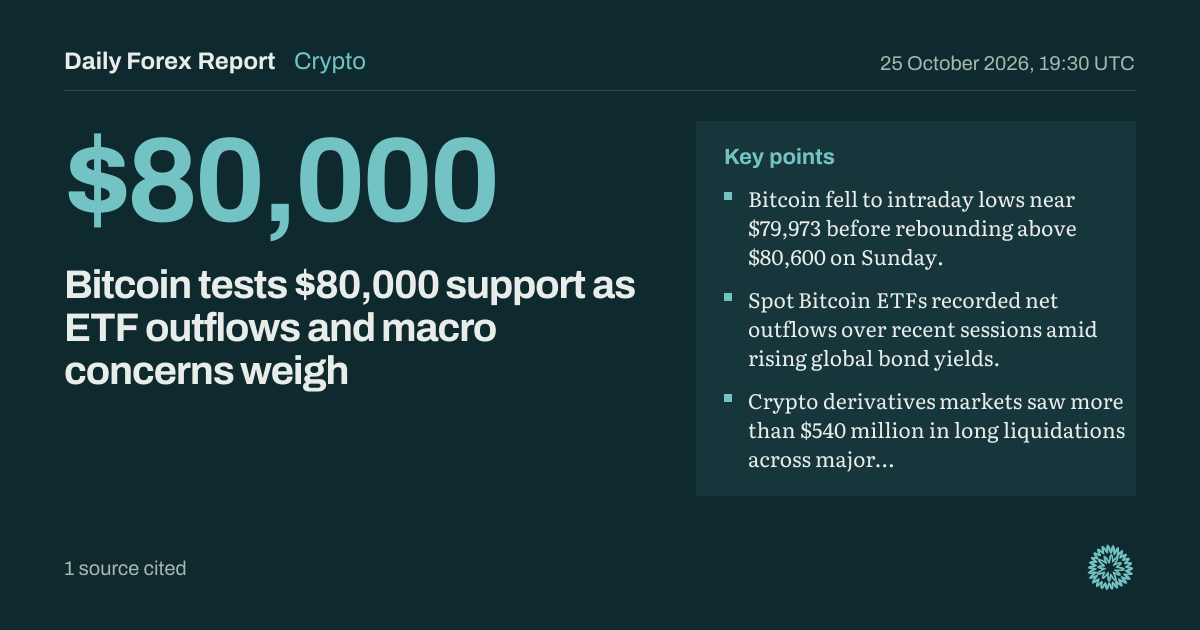
Bitcoin tests $80,000 support as ETF outflows and macro concerns weigh
Bitcoin dipped toward $80,000 on October 25 as spot ETF outflows and broader risk aversion from surging oil prices triggered derivatives liquidations.
Key points
- Bitcoin fell to intraday lows near $79,973 before rebounding above $80,600 on Sunday.
- Spot Bitcoin ETFs recorded net outflows over recent sessions amid rising global bond yields.
- Crypto derivatives markets saw more than $540 million in long liquidations across major exchanges.
Bitcoin faced renewed selling pressure over the weekend, testing key technical support just below the 80,000 dollar threshold on Sunday, October 25, as investors trimmed exposure across high-beta digital assets.
The benchmark cryptocurrency slipped to an intraday low of 79,973 dollars before recovering toward 80,600 dollars during European trading hours. The pullback followed several consecutive sessions of net outflows from US-listed spot Bitcoin exchange-traded funds, which saw institutional allocations slow amid broad-based financial market caution.
Derivatives markets amplified the downward move. Data from tracking platforms showed that leveraged long positions suffered more than 540 million dollars in liquidations over a 48-hour period, forcing automated market makers to offload spot inventory to balance order books.
Macroeconomic crosscurrents have played a defining role in the weekend retreat. Resurgent energy prices, with Brent crude holding above 115 dollars a barrel, and rising US Treasury yields have reinforced expectations that the Federal Reserve will maintain restrictive interest rate policy well into 2027. Rising real yields tend to reduce investor appetite for speculative non-yielding assets.
Despite the short-term pullback, on-chain metrics show that long-term accumulation addresses continue to absorb exchange outflows, setting a solid floor above the late-summer consolidation ranges. Traders are monitoring this week's Federal Open Market Committee meeting on October 27 and 28 for fresh signals on dollar liquidity.