Economy
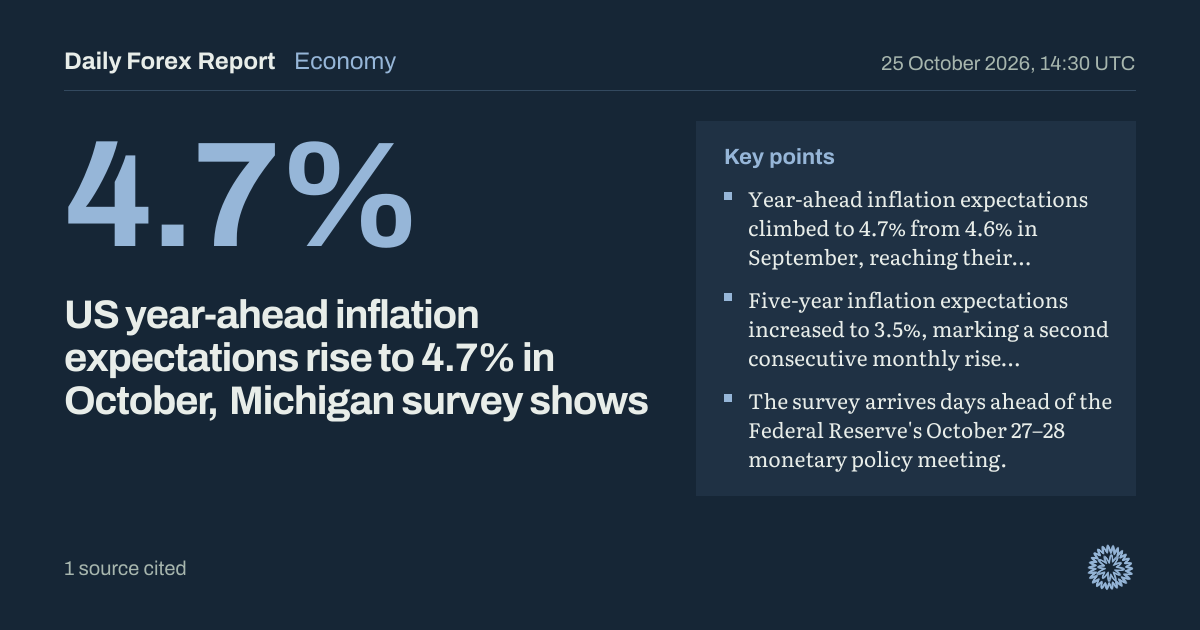
US year-ahead inflation expectations rise to 4.7% in October, Michigan survey shows
US year-ahead inflation expectations rose to 4.7% in October, University of Michigan survey data show, as climbing fuel prices lifted living costs.
Key points
- Year-ahead inflation expectations climbed to 4.7% from 4.6% in September, reaching their highest level since May.
- Five-year inflation expectations increased to 3.5%, marking a second consecutive monthly rise across both horizons.
- The survey arrives days ahead of the Federal Reserve's October 27–28 monetary policy meeting.
US consumers expect inflation to remain elevated over the coming year, according to final October survey results released by the University of Michigan on October 25. Year-ahead inflation expectations rose to 4.7 percent in October, edging up from 4.6 percent in September and matching their highest level since May.
Longer-term expectations also showed persistent upward pressure. Five-year inflation expectations rose to 3.5 percent from 3.4 percent in September, marking a second consecutive monthly increase across both forecast horizons. Survey directors noted that higher household living costs and renewed price jumps at automotive fuel pumps contributed directly to the deteriorating outlook.
The survey findings follow weeks of rising energy costs, with international benchmark Brent crude surpassing 115 dollars a barrel amid heightened maritime security risks in the Gulf. Higher fuel prices feed quickly into headline inflation readings and tend to disproportionately influence short-term consumer price psychology.
The persistence of elevated inflation expectations will be a key consideration for the Federal Open Market Committee, which begins its two-day policy meeting on October 27. The central bank raised its benchmark interest rate by 25 basis points to a 3.75 to 4.00 percent target range in September and has signaled that bringing price growth back to 2 percent remains its primary priority.
While financial markets broadly expect the Federal Reserve to hold policy rates steady this week, the upward drift in household expectations reinforces views that policymakers will maintain restrictive borrowing conditions well into next year.