Central banks
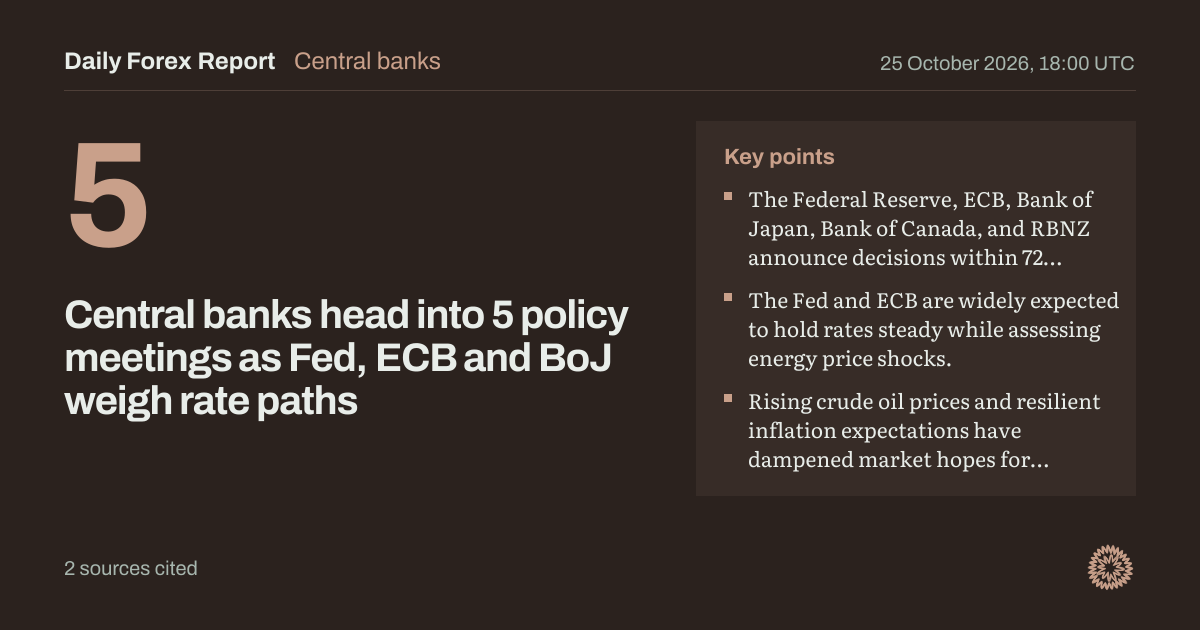
Central banks head into 5 policy meetings as Fed, ECB and BoJ weigh rate paths
Five major central banks announce rate decisions this week, with markets expecting holds from the Fed and ECB while monitoring rising energy costs.
Key points
- The Federal Reserve, ECB, Bank of Japan, Bank of Canada, and RBNZ announce decisions within 72 hours.
- The Fed and ECB are widely expected to hold rates steady while assessing energy price shocks.
- Rising crude oil prices and resilient inflation expectations have dampened market hopes for early rate cuts.
Global financial markets are preparing for an intense cluster of monetary policy decisions this week, with five G10 central banks scheduled to announce interest rate determinations between Wednesday, October 28, and Friday, October 30.
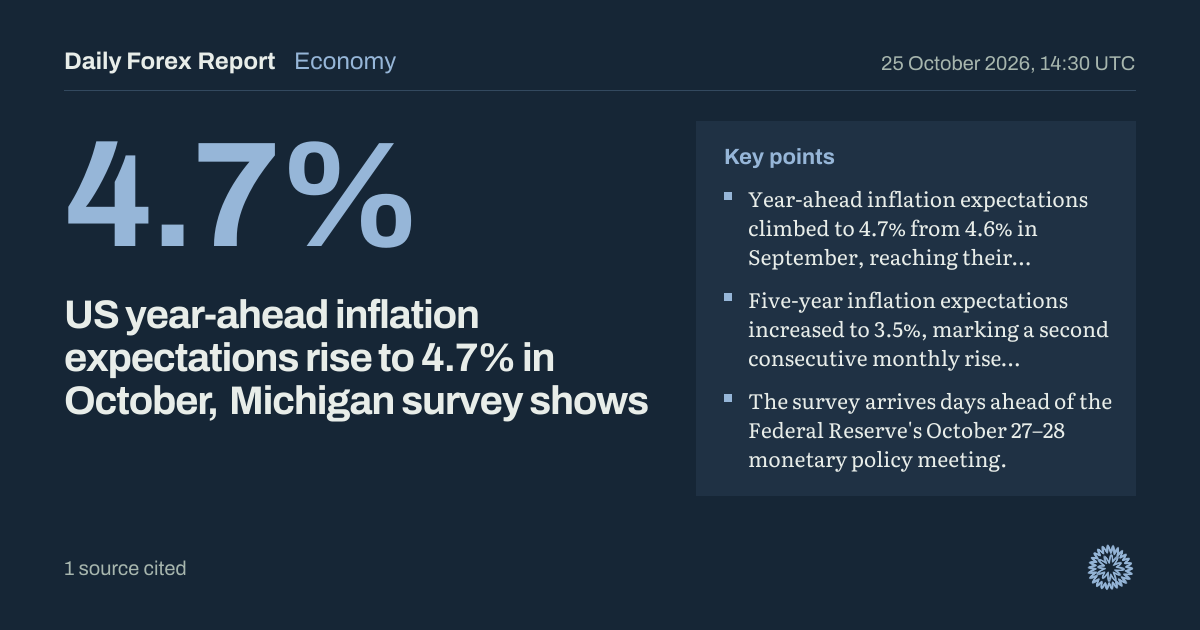
The Federal Open Market Committee opens the cycle on October 28, following a two-day meeting in Washington. Consensus expectations point to the Fed holding the federal funds target range steady at 3.75 to 4.00 percent, after delivering a 25-basis-point increase in September. Investors will scrutinize Chair Kevin Warsh's press conference for signals regarding potential tightening at the December meeting, particularly after consumer inflation expectations jumped to 4.7 percent in October.
The European Central Bank follows on Thursday, October 29. The Governing Council is expected to keep its deposit facility rate at 2.50 percent, balancing slowing economic growth across core member states with elevated headline energy prices and widening sovereign bond spreads in France.
Elsewhere, the Bank of Canada is forecast to keep its policy rate at 2.25 percent on Wednesday, while the Reserve Bank of New Zealand is expected to lift its official cash rate to 3.00 percent to counter persistent services inflation. The Bank of Japan concludes the busy week on Friday, with markets anticipating a hold at 1.25 percent.
The concentration of policy statements across three consecutive trading sessions is expected to generate sharp volatility across currency pairs and sovereign bond yields, as central bankers navigate the dual pressures of slowing growth and resilient inflation.