Economy
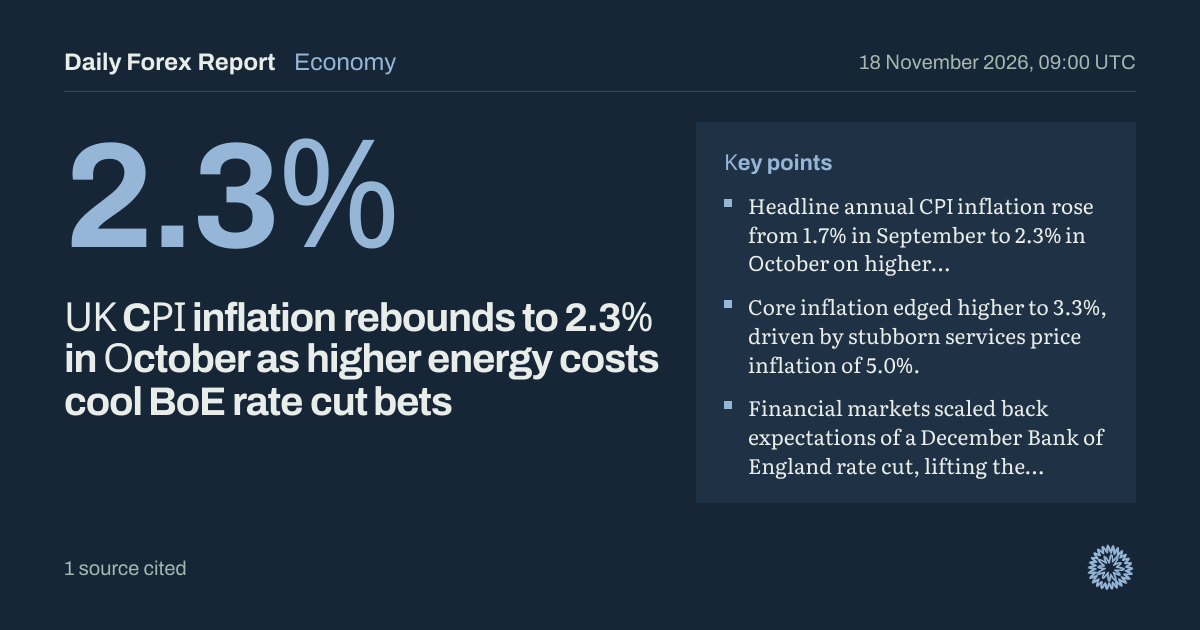
UK CPI inflation rebounds to 2.3% in October as higher energy costs cool BoE rate cut bets
UK consumer price inflation jumped to 2.3% in October, exceeding expectations and reducing prospects of near-term Bank of England rate reductions.
Key points
- Headline annual CPI inflation rose from 1.7% in September to 2.3% in October on higher domestic energy tariffs.
- Core inflation edged higher to 3.3%, driven by stubborn services price inflation of 5.0%.
- Financial markets scaled back expectations of a December Bank of England rate cut, lifting the British Pound.
The United Kingdom Consumer Prices Index registered a sharp acceleration in October, advancing to an annualized rate of 2.3 percent after dipping to 1.7 percent in the previous month, according to official figures released by the Office for National Statistics on Wednesday, November 18. The rebound exceeded market projections of a 2.2 percent print and marked a definitive move back above the Bank of England's two percent target benchmark.
The primary catalyst behind the inflationary upturn was the October upward revision to the Ofgem household energy price cap, which raised standard electricity and gas tariffs across Great Britain. Gas prices climbed by 7.1 percent over the month, contrasting with significant declines recorded during the corresponding period last year. Core inflation, which excludes volatile energy, food, alcohol, and tobacco categories, edged higher to 3.3 percent annualized, while services inflation held persistently sticky at 5.0 percent.
The hotter inflation print prompted fixed income and foreign exchange traders to sharply reduce wagers on monetary easing from the Bank of England. Money markets repriced the likelihood of a 25 basis point rate cut at the December Monetary Policy Committee meeting down to less than 15 percent, down from roughly 20 percent prior to the release. Sterling rallied in response, gaining 0.4 percent against the US Dollar to trade near 1.2680, while Gilt yields climbed across medium-term maturities as investors adjusted to an environment of prolonged restrictive rates.