Economy
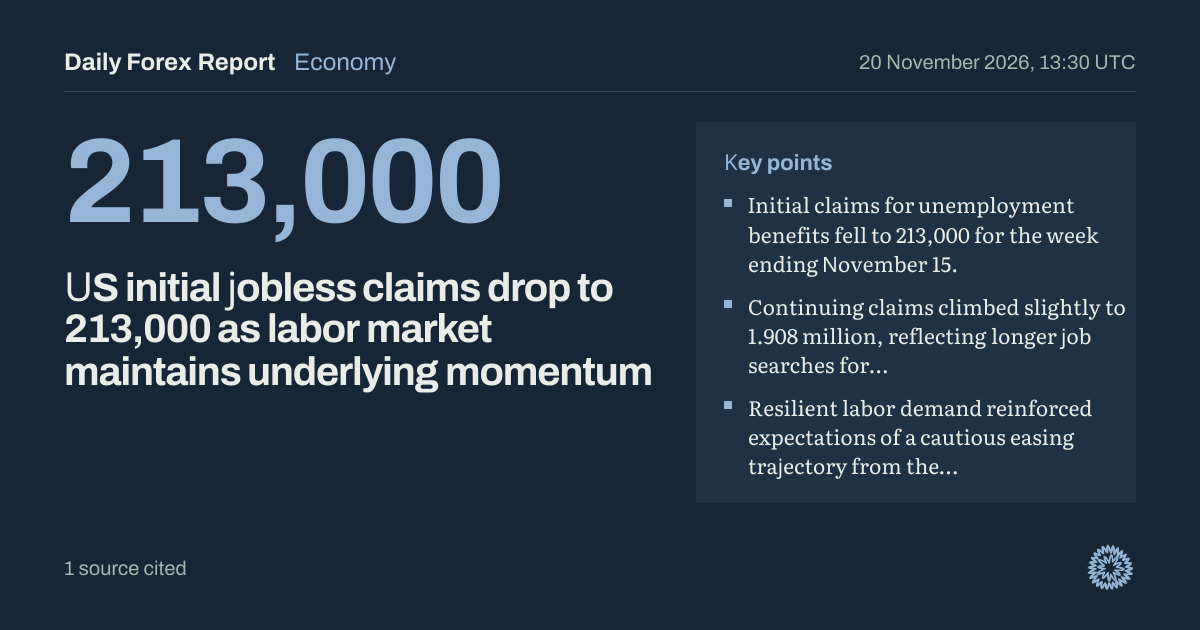
US initial jobless claims drop to 213,000 as labor market maintains underlying momentum
US weekly jobless claims declined by 6,000 to 213,000, reaching their lowest level in seven months and underscoring sustained employment resilience.
Key points
- Initial claims for unemployment benefits fell to 213,000 for the week ending November 15.
- Continuing claims climbed slightly to 1.908 million, reflecting longer job searches for unemployed workers.
- Resilient labor demand reinforced expectations of a cautious easing trajectory from the Federal Reserve.
The United States labor market demonstrated continued resilience during mid-November as the number of Americans filing new applications for state unemployment benefits dropped to 213,000, according to official data released by the Department of Labor on Friday, November 20. The reading marked a decrease of 6,000 claims from the unrevised previous week and registered the lowest headline figure since April.
The four-week moving average of initial claims, which smooths out weekly volatility, fell by 3,750 to 217,750, indicating that corporate layoffs remain low across broad sectors of the economy despite elevated borrowing costs and selective hiring freezes in tech and manufacturing. Meanwhile, continuing claims, which measure individuals receiving ongoing unemployment benefits, edged up by 36,000 to 1.908 million for the week ending November 8, suggesting that workers who lose positions are taking longer to secure new employment.
The persistent strength in initial jobless claims reinforced expectations that the Federal Reserve will avoid aggressive monetary easing in upcoming meetings. Market participants adjusted terminal rate projections higher, supporting two-year Treasury yields around 4.35 percent. The US Dollar maintained strength across major currency pairs, while equity futures showed modest gains as investors welcomed ongoing economic vitality alongside manageable labor cost pressures.
Federal Reserve officials have repeatedly cited labor market stability as a key consideration in determining the pace of policy normalization. With layoffs running at historic lows and weekly claims stabilizing around historical averages, policymakers possess substantial flexibility to calibrate interest rate cuts without risking an abrupt deterioration in employment conditions.